
How to Protect Your Driveway from Dumpster Damage
Renting a dumpster is a convenient way to handle cleanouts, renovations, roofing projects, construction debris, and heavy junk removal. However, a loaded dumpster can put serious pressure on asphalt, concrete, pavers, or gravel if the driveway is not prepared properly.
For New Jersey homeowners, the best way to prevent driveway damage is to plan the placement area, use protective materials, avoid overloading the container, and communicate with the dumpster rental company before delivery. With the right precautions, you can reduce the risk of cracks, ruts, gouges, stains, and costly repairs.
Before scheduling delivery, ask whether the dumpster rental company provides driveway protection boards, plywood, or mats. Some companies include this service, while others expect the homeowner to prepare the surface before the truck arrives. Confirm whether the rental company will place the boards or whether you need to have them ready.
Can a Dumpster Damage Your Driveway?
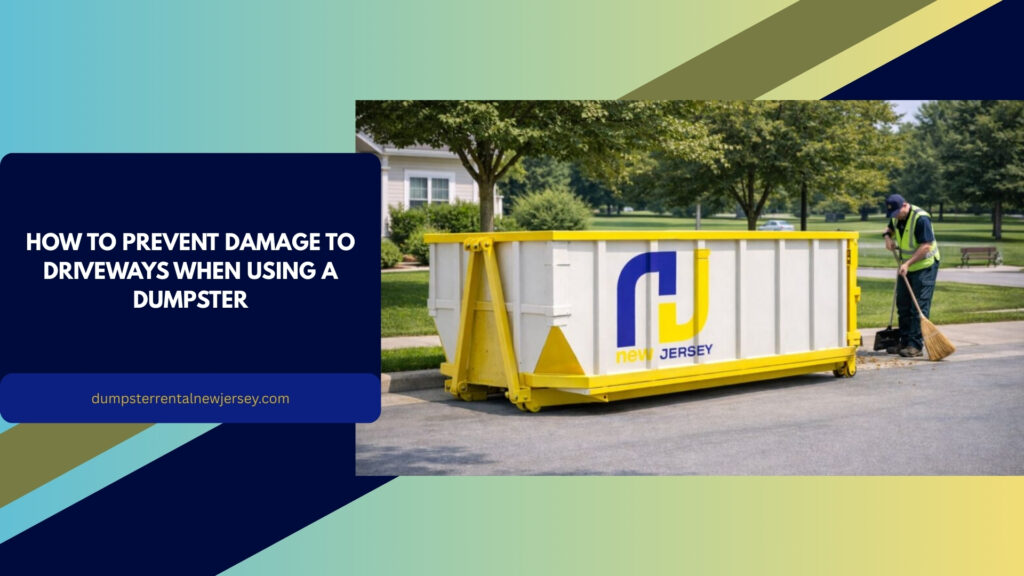
Yes, a dumpster can damage a driveway if it is placed directly on a weak, uneven, soft, or unprotected surface. A roll-off dumpster becomes extremely heavy once it is loaded with construction debris, roofing shingles, concrete, brick, dirt, furniture, or renovation waste.
The main risks come from concentrated pressure points. Metal wheels, dumpster rails, and the delivery truck can focus thousands of pounds of weight onto small areas of the driveway. On asphalt, this can lead to ruts, dents, or gouges. On concrete, it can cause cracks, chips, or surface stress. Pavers can shift, and gravel can become uneven or deeply rutted.
The good news is that most driveway damage can be reduced with proper placement of plywood, wood boards, rubber mats, or heavy-duty protection boards. If available, a rubber-wheeled trailer dumpster may be gentler on some residential driveways than a steel-wheeled roll-off container, though protective boards may still be needed.
These steps reduce the risk of damage but cannot guarantee protection on weak, cracked, recently sealed, or poorly supported driveways.
Why Driveway Damage Happens During Dumpster Rentals
Driveway damage usually happens because of weight, pressure, movement, or poor placement. A dumpster does not need to move much to cause damage. Even when it sits still, the loaded container can press into the surface beneath it for days or weeks.
Damage is more likely when the driveway already has cracks, soft spots, thin asphalt, weak concrete, loose pavers, or poor drainage. Hot weather, recent sealing, and uneven ground can also make the surface more vulnerable.
Heavy Dumpster Weight
A loaded dumpster can weigh several tons, depending on the size of the container and the type of debris inside. Dense materials such as concrete, brick, dirt, tile, and roofing shingles add weight quickly.
When that weight sits on a small contact area, it can leave indentations or deepen existing cracks. This is why it is important to spread the weight across a larger surface area using plywood, boards, or heavy-duty mats.
Delivery Truck Pressure
The delivery truck can create just as much risk as the dumpster itself. During drop-off and pickup, the truck may need to back into the driveway, turn, stop, or adjust its position. These movements can create pressure and friction on the surface.
Before delivery, clear the vehicles, branches, trash cans, basketball hoops, low wires, and other obstacles from the driveway. The easier it is for the driver to position the dumpster, the lower the risk of unnecessary surface damage.
Uneven or Weak Driveway Surfaces
Uneven driveways are more likely to crack, shift, or develop ruts under a dumpster. If one side of the container sits lower than the other, the weight may not distribute evenly.
Soft asphalt, loose gravel, cracked concrete, and unstable pavers should be avoided when possible. If the driveway has weak areas, mark them before delivery and ask the rental company about the safest placement option.
Inspect Your Driveway Before Dumpster Delivery
Before the dumpster arrives, inspect the driveway carefully. This gives you a chance to identify problem areas and document the condition of the surface before the rental begins.
A quick inspection can also help the driver place the dumpster in the safest available spot. If you already know where cracks, chips, soft spots, or slopes are located, you can avoid placing the container directly over them.
Look for Existing Cracks, Chips, or Soft Spots
Walk the full driveway and look for existing cracks, crumbling edges, loose pavers, sunken areas, or soft asphalt. Pay attention to spots where water collects, because moisture can weaken the base below the driveway.
Mark any weak areas with chalk or tape so they are easy to see on delivery day. If your driveway has major existing damage, ask the dumpster provider whether street placement, alternate placement, or extra protection is recommended.
Take Photos Before the Dumpster Arrives
Take clear photos of your driveway before delivery. Capture wide shots of the entire placement area and close-up photos of any existing cracks, chips, stains, or soft spots.
These photos create a useful record of the driveway’s condition before the dumpster is dropped off. If damage appears later, you will have documentation to discuss the issue with the rental company.
Choose the Safest Dumpster Placement Location
Choosing the right placement location is one of the most important ways to protect your driveway. The best location is usually a flat, stable area with enough space for the dumpster and delivery truck.
Avoid placing the dumpster near the edge of the driveway, on steep slopes, over weak areas, or directly on decorative surfaces when another safe option is available.
Avoid Sloped or Uneven Areas
Do not place a dumpster on a steep or uneven section of the driveway. A sloped surface can cause the container to shift, rock, or place extra pressure on one side.
If a slightly uneven area is the only option, protective boards or mats become even more important. They help create a more stable base and reduce direct contact between the container and driveway surface.
Keep the Dumpster Away from Driveway Edges
Driveway edges are often weaker than the center of the surface. Placing a dumpster too close to the edge can cause cracking, crumbling, or collapse, especially on asphalt or older concrete.
Try to keep the dumpster several feet away from the driveway edge, curbs, landscaping, irrigation lines, and retaining walls. This helps protect both the driveway and the surrounding property.
Do You Need a Permit for Dumpster Placement in New Jersey?
In New Jersey, driveway placement usually avoids street-permit issues because the dumpster remains on private property. However, if the dumpster must be placed on a public street, shoulder, curb lane, sidewalk area, or right-of-way, your municipality may require a permit.
Permit rules vary by town, so check with your local municipal office before delivery. Some municipalities may have specific requirements for placement duration, reflective markings, safety cones, or distance from intersections.
The dumpster should not block sidewalks, fire hydrants, intersections, neighboring driveways, or normal pedestrian and vehicle traffic. If street placement is necessary, confirm the rules before the dumpster arrives so you can avoid delays, fines, or forced relocation.
Use Plywood, Boards, or Rubber Mats for Protection
Protective materials create a barrier between the dumpster and your driveway. They also help spread the weight of the dumpster across a wider area.
For many residential driveways, 3/4-inch plywood, sturdy 2×6 boards, rubber mats, or heavy-duty plastic boards can help reduce the risk of cracks, dents, and surface marks. Ask your dumpster rental company whether they provide driveway protection materials or whether you should place them before delivery.
For smaller containers, one or more 4×8 plywood sheets may be enough to cover the main contact area. For larger containers, use multiple boards so the rails, wheels, or contact points remain fully supported. Make sure boards sit flat and do not shift during delivery, loading, or pickup.
Where to Place Protective Materials
Protective materials should go under the dumpster’s main contact points. These usually include the rails, wheels, feet, or areas where the container rests on the driveway.
Place boards or plywood before the dumpster is lowered into position. The goal is to prevent metal from sitting directly on asphalt, concrete, pavers, or gravel. For larger dumpsters, use enough boards to cover the full support area rather than only a small section.
Why Weight Distribution Matters
Weight distribution matters because driveway damage often happens when too much pressure is concentrated in one place. A board, mat, or plywood sheet spreads that force across a larger surface.
This is especially important when the dumpster will hold heavy debris. Concrete, brick, dirt, tile, and shingles can create enough weight to stress residential driveways if the load is not properly supported.
Protect Different Types of Driveways
Different driveway surfaces react differently to dumpster weight. Asphalt, concrete, pavers, and gravel each need a slightly different protection strategy.
Before scheduling delivery, consider the condition, age, and material of your driveway. This will help you choose the safest placement location and the right type of protection.
Asphalt Driveways
Asphalt is more flexible than concrete, but it can soften in hot weather. During New Jersey summers, asphalt driveways are more likely to dent, rut, or show marks under a heavy dumpster.
Use plywood or boards under the container, especially during warm months. Avoid placing a dumpster on freshly sealed asphalt until the surface has fully cured.
Concrete Driveways
Concrete is strong, but it can still crack under concentrated weight. Older concrete, thin slabs, existing cracks, and weak edges are especially vulnerable.
Place boards or plywood under the rails and contact points. Avoid setting the dumpster directly over visible cracks, expansion joints, or damaged sections whenever possible.
Paver Driveways
Paver driveways need extra care because individual pavers can shift, sink, or crack under uneven pressure. Decorative pavers can also be expensive to repair.
Use rubber mats, plywood, or heavy-duty boards to spread the load. After pickup, inspect the area for shifted pavers and address small issues before they become larger repairs.
Gravel Driveways
Gravel driveways can develop deep ruts if a dumpster is placed directly on loose or soft gravel. The container may also settle unevenly if the base is not compacted.
Choose the firmest, flattest area available. Plywood or heavy-duty boards can help create a more stable base. After pickup, rake and compact the gravel to restore the surface.
Avoid Overloading the Dumpster
Overloading the dumpster increases the chance of driveway damage. The heavier the container becomes, the more pressure it places on the surface below.
Always follow the weight limit provided by your dumpster rental company. Do not fill above the top edge of the container, and avoid loading all heavy materials on one side.
Be Careful with Concrete, Brick, Dirt, and Shingles
Concrete, brick, dirt, tile, and roofing shingles are much heavier than general household junk. These materials can quickly push a dumpster close to or beyond its weight limit.
If your project involves heavy debris, ask the rental company which dumpster size is appropriate. In some cases, a smaller container or multiple hauls may be safer for your driveway than one large, overloaded dumpster.
Choose the Right Dumpster Size for Your Driveway
The right dumpster size can reduce unnecessary weight and make placement easier. Larger dumpsters hold more material, but they also require more space and can become extremely heavy when loaded.
For many residential projects, a smaller or mid-sized dumpster may be easier to place safely on a driveway. A 10-yard or 15-yard dumpster may be suitable for small cleanouts or heavy debris, while larger projects may require a 20-yard or 30-yard dumpster, depending on the material.
Before ordering, describe your project, driveway surface, and available space to the rental company. They can help you choose a size that fits your job without putting unnecessary stress on your driveway.
Make Sure the Delivery Truck Has Enough Clearance
The delivery truck needs enough room to drop off and pick up the dumpster safely. Tight spaces, low branches, overhead wires, parked vehicles, and sharp turns can make delivery more difficult.
Clear the driveway before the truck arrives. Move cars, trailers, trash bins, basketball hoops, garden equipment, and other obstacles. Trim low branches if needed, and make sure there is a clear path to the placement area.
If your driveway is narrow, steep, curved, or blocked by low wires, tell the rental company before delivery. This helps the driver plan a safer approach and avoid unnecessary pressure on the driveway.
Consider Weather Conditions During Your Rental
The weather can affect how your driveway responds to dumpster weight. Hot weather can soften asphalt, while freezing conditions can make existing concrete cracks worse.
If possible, avoid placing a heavy dumpster on asphalt during the hottest part of the day or during extreme summer heat. In colder months, avoid placing the container over cracked or weakened concrete where freeze-thaw conditions may already be causing stress.
Rain can also soften gravel or soil near the driveway edge. If the ground is wet, choose the firmest placement area and use boards or mats for extra support.
What to Do if a Dumpster Damages Your Driveway
If you notice driveway damage after delivery, during the rental, or after pickup, document it right away. Take clear photos from several angles and compare them with the photos you took before delivery.
Contact the dumpster rental company as soon as possible. Provide the photos, explain what happened, and review the rental agreement. Responsibility may depend on the driveway’s prior condition, placement instructions, protection used, and the terms of the rental.
For serious cracks, ruts, or surface damage, contact a qualified driveway repair professional. Addressing the issue early can help prevent the damage from spreading.
Rent a Driveway-Safe Dumpster in New Jersey
Protecting your driveway starts before the dumpster arrives. The right dumpster size, proper placement, protective boards, careful loading, and clear communication can make a major difference.
If you need a dumpster rental in New Jersey, choose a company that understands residential driveway protection and can help you plan a safe delivery. Before your rental, discuss your driveway surface, available space, project type, debris weight, and any concerns about cracks, slopes, pavers, asphalt, or concrete.
For a driveway-safe dumpster rental in New Jersey, contact Dumpster Rental New Jersey to choose the right container size and placement plan for your project. Ask our team about driveway protection options before delivery.
Fast & Friendly Service
Planning a Cleanup or Renovation?
Get a fast, free dumpster rental quote with flat-rate pricing and same-day delivery options across New Jersey.