
How to Choose the Right Dumpster Size for Bathroom & Kitchen Remodels in New Jersey
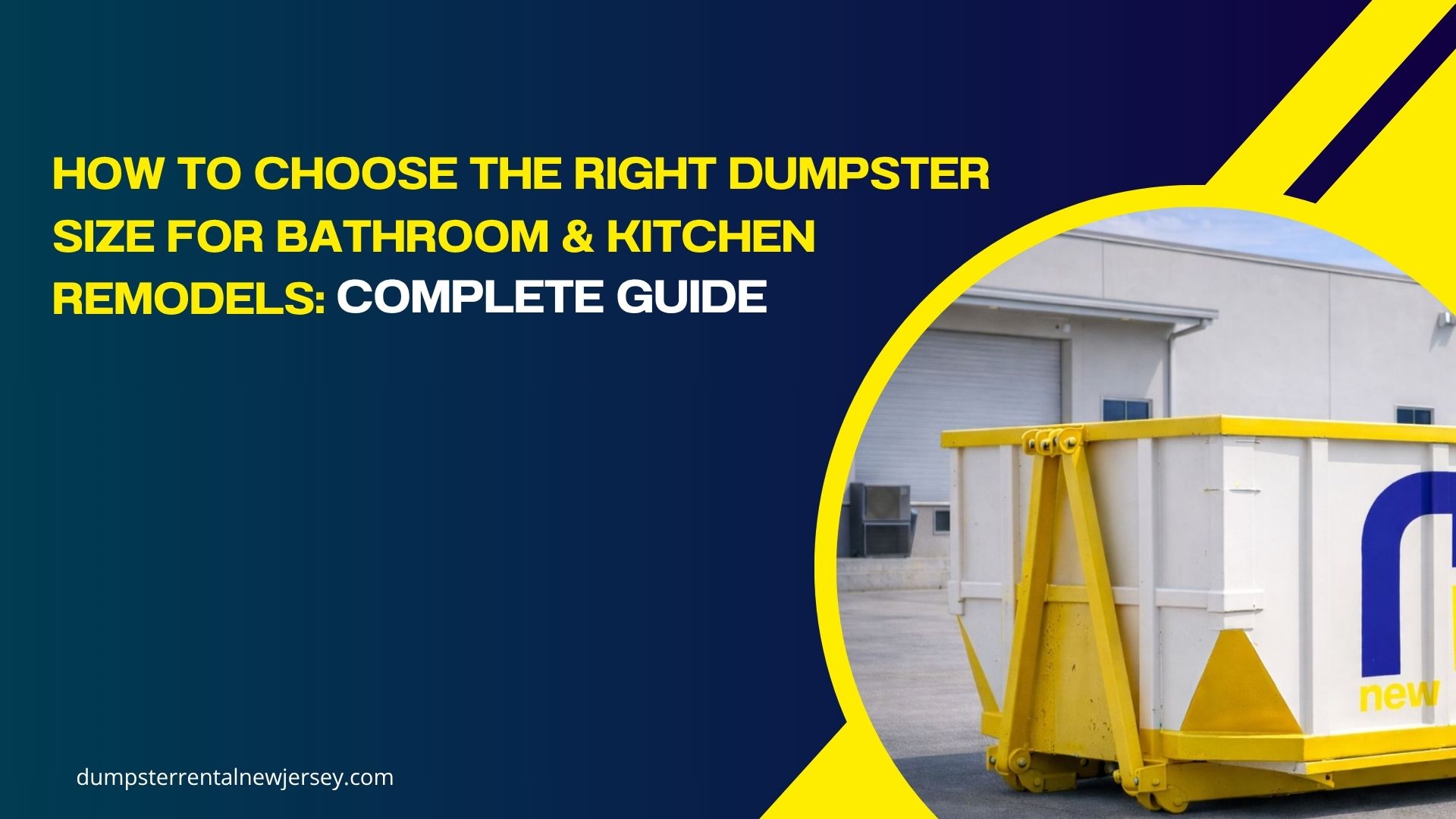
Choosing the right dumpster size keeps a bathroom or kitchen remodel cleaner and easier to manage. The right container gives you room for tile, cabinets, countertops, drywall, flooring, fixtures, appliances, and debris without paying for space you do not need.
For most New Jersey homeowners, the best size depends on scope, debris, weight, and placement. Small bathroom updates may need a 10-yard dumpster. A full kitchen remodel often works best with a 20-yard dumpster. Larger projects may need a 30-yard or 40-yard container.
New Jersey projects vary by property type. A driveway dumpster may be simple, while street placement in a denser town may require municipal approval. Whether your remodel is in North Jersey, Central Jersey, South Jersey, or along the Shore, confirm local rules before delivery.
Quick Dumpster Size Chart for Bathroom and Kitchen Remodels
Use this chart as a starting point.
| Project Type | Recommended Dumpster Size | Best For |
| Small bathroom update | 10-yard dumpster | Vanity removal, tile, light drywall, flooring |
| Full bathroom remodel | 10- or 15-yard dumpster | Tub, toilet, vanity, tile, fixtures |
| Small kitchen refresh | 15-yard dumpster | Cabinets, countertops, flooring |
| Full kitchen remodel | 20-yard dumpster | Cabinets, countertops, appliances, drywall |
| Kitchen and bathroom together | 20- or 30-yard dumpster | Mixed debris from multiple rooms |
| Major home renovation | 30- or 40-yard dumpster | Multi-room remodels and bulky debris |
Dumpster Sizes for Remodel Projects
Dumpster sizes are measured in cubic yards. One cubic yard is about the size of a standard household stove. Larger containers hold more debris, but bigger is not always better. Heavy materials like tile, stone, plaster, concrete, and countertops can reach weight limits before the dumpster is full.
A 10-yard dumpster is usually about 12 feet long, 8 feet wide, and 4 feet high. It holds about 3 pickup truck loads and works well for small bathroom remodels, vanity removal, tile, and light flooring.
A 15-yard dumpster is usually about 16 feet long, 8 feet wide, and 4.5 feet high. It holds about 4 to 5 pickup truck loads and works well for medium bathrooms or small kitchen projects.
A 20-yard dumpster is usually about 22 feet long, 8 feet wide, and 4.5 feet high. It holds about 6 to 8 pickup truck loads and is often the best size for full kitchen remodels.
10-Yard Dumpster for Small Bathroom Remodels
A 10-yard dumpster is usually best for small bathroom updates and light remodeling work. It can handle vanity removal, small tile jobs, fixture replacement, light flooring removal, and limited drywall.
This size fits in most driveways and does not take up much space. It is cost-effective when the remodel is limited to one small room. A 10-yard dumpster may be enough if you are replacing a vanity, removing a toilet, updating fixtures, pulling up flooring, or removing tile from a compact bathroom. If you need a 10 yard dumpster for bathroom remodel debris, start here.
15-Yard Dumpster for Medium Bathroom or Small Kitchen Projects
A 15-yard dumpster gives homeowners more room than a 10-yard container without taking up as much space as a 20-yard dumpster. It works well for medium bathroom remodels, larger bathroom updates, or small kitchen refreshes.
This size can handle moderate amounts of tile, drywall, cabinets, countertops, flooring, and light demolition debris. It is a good middle-ground option when a 10-yard dumpster feels too small but a 20-yard dumpster may be more than the project requires.
20-Yard Dumpster for Full Kitchen Remodels
A 20-yard dumpster is often the best choice for a full kitchen remodel. Kitchen projects create bulky debris from cabinets, countertops, flooring, backsplash materials, drywall, sinks, fixtures, and packaging.
When loading a 20-yard dumpster, place heavier materials such as tile, stone, sinks, and countertop pieces near the bottom. Break down cabinets and larger pieces to save space. If you are comparing a 20 yard dumpster for kitchen remodel debris, this size usually balances capacity, driveway fit, and cost.
30-Yard and 40-Yard Dumpsters for Larger Renovations
A 30-yard dumpster is better for larger renovation projects involving more than one room. If you are remodeling a kitchen and bathroom together, replacing nearby flooring, or removing a large amount of drywall and cabinetry, a 30-yard container may be safer.
A 40-yard dumpster is usually reserved for major home renovation projects, large demolition jobs, or multi-room remodels that produce a large amount of bulky debris. It can handle cabinets, flooring, drywall, fixtures, framing materials, and other renovation waste.
Bathroom vs. Kitchen Remodel Waste
Bathroom and kitchen remodels produce different debris. Bathrooms often generate smaller amounts of waste, but the materials can be heavy. Kitchens usually create bulkier debris because of cabinets, countertops, appliances, flooring, and packaging. Understanding the difference helps you avoid renting a dumpster that is too small or paying for one that is much larger than needed.
Common Bathroom Remodel Debris
Bathroom remodels often produce broken tile, drywall, flooring, vanities, sinks, toilets, tubs, shower doors, fixtures, mirrors, and old plumbing materials. Tile, porcelain, tubs, and concrete backer board can add weight quickly.
For a small bathroom update, a 10-yard dumpster is often enough. For a full bathroom gut renovation, a 15-yard or 20-yard dumpster may be better, especially if you are removing a tub, tile walls, flooring, and drywall. Load heavy bathroom debris evenly across the bottom of the dumpster to keep the container balanced for transport.
Common Kitchen Remodel Debris
Kitchen remodels often produce cabinets, countertops, flooring, backsplash tile, drywall, sinks, fixtures, appliances, wood scraps, trim, and packaging. Cabinets and countertops can take up a lot of space, even when they are not extremely heavy.
How to Choose a Dumpster for a Bathroom Remodel
The right dumpster size for a bathroom remodel depends on how much you are removing. If you are wondering what size dumpster for bathroom remodel debris is best, start with the amount of tile, flooring, drywall, fixtures, and vanity material.
A simple cosmetic update may only create a few pickup loads of debris, while a full gut renovation can produce much more waste. Before renting, list what will be removed: tile, flooring, drywall, tub, toilet, vanity, sink, mirrors, fixtures, and hidden damaged materials.
Small Bathroom Updates
Small bathroom updates usually include replacing a vanity, removing a toilet, updating fixtures, changing flooring, or removing a small amount of tile. These projects usually fit well in a 10-yard dumpster. A 10-yard container is compact, easy to place, and enough for light bathroom debris, especially when driveway space is limited.
Full Bathroom Gut Renovations
A full bathroom gut renovation creates more debris because nearly everything may be removed. This can include the tub, shower, vanity, toilet, tile, flooring, drywall, trim, and fixtures.
For this type of project, a 15-yard or 20-yard dumpster is often better. The extra space helps handle heavy and bulky materials without needing another container halfway through the job. If your bathroom has tile walls, a tile floor, cast iron tub, plaster, or concrete backer board, ask about weight limits before choosing the final size.
How to Choose a Dumpster for a Kitchen Remodel
Kitchen remodels usually require more dumpster space than bathroom remodels because the debris is bulkier. Cabinets, countertops, flooring, backsplash, fixtures, sinks, appliances, and drywall can quickly fill a small container.
If you are asking what size dumpster for kitchen remodel debris is right, a 20-yard dumpster is often the best starting point for cabinets, countertops, flooring, drywall, and bulky renovation waste. For a small kitchen refresh, a 15-yard dumpster may be enough.
Cabinet, Countertop, and Flooring Removal
Cabinets take up a lot of space in a dumpster, especially if loaded whole. Breaking them down before disposal can save room. Countertops may be bulky or heavy depending on the material.
Laminate countertops are lighter, while stone, quartz, marble, and granite are much heavier. Flooring materials also vary. Vinyl and laminate are lighter, while tile and hardwood can add more weight. If your kitchen remodel includes cabinet removal, countertop removal, and flooring replacement, a 20-yard dumpster is usually practical.
Appliance Disposal and Heavy Kitchen Materials
Appliances need special attention because disposal rules can vary. Refrigerators, freezers, ovens, dishwashers, and other appliances may need to be handled separately or approved before loading.
Heavy kitchen materials such as stone countertops, tile flooring, cast iron sinks, and masonry should be loaded carefully. Too much heavy material in one container can lead to weight overage fees. Before scheduling your dumpster, tell the rental provider if you plan to remove appliances or heavy countertop materials.
How to Estimate Remodel Debris Before Renting
Estimating debris before renting helps you choose a dumpster that matches your project. Start by listing each material you plan to remove, then consider whether the debris is bulky, heavy, or both. Bathroom projects often include tile, tubs, vanities, toilets, drywall, flooring, and fixtures. Kitchen remodels often include cabinets, countertops, appliances, flooring, backsplash, drywall, and trim.
Pickup truck loads are a simple way to estimate remodel waste. A standard pickup truck bed usually holds about two to three cubic yards of loose debris. A 10-yard dumpster holds about 3 pickup truck loads, a 15-yard dumpster holds 4 to 5, a 20-yard dumpster holds 6 to 8, a 30-yard dumpster holds 9 to 12, and a 40-yard dumpster holds 12 to 16.
Heavy Materials, Weight Limits, and Sizing Up
Some remodel materials reach weight limits faster than expected. Heavy materials include tile, stone countertops, concrete, plaster, masonry, tubs, and dense flooring. Even if the dumpster is not full, it may exceed the allowed weight if too many heavy materials are loaded. Match the dumpster size to both the amount and type of debris.
Choose the larger dumpster if your remodel includes heavy materials, multiple rooms, or bulky debris that may not stack neatly. Bathroom and kitchen debris often expands once cabinets, tile, drywall, flooring, fixtures, and countertops are removed.
Sizing up may be better if your project includes tile walls, stone countertops, plaster, concrete backer board, appliance disposal, or a combined bathroom and kitchen renovation. A larger container may cost more upfront, but it can help you avoid ordering a second dumpster, delaying the project, or paying extra haul fees.
What Affects the Cost of a Remodel Dumpster Rental in New Jersey?
The cost of a remodel dumpster rental in New Jersey depends on dumpster size, debris type, rental period, location, weight allowance, and disposal fees. A small bathroom remodel usually costs less to clean up than a full kitchen renovation because it produces less debris and often requires a smaller container.
Heavy materials can affect the final price. Tile, stone countertops, concrete, plaster, and old flooring may increase the total weight. If the loaded container exceeds the included weight limit, overage fees may apply.
Placement can also influence cost. A dumpster on a private driveway is usually simpler than one placed on a street or public right-of-way. In some New Jersey municipalities, street placement may require a permit before delivery.
Ask what is included in the base price, how long you can keep the dumpster, what happens if the container exceeds the weight limit, and whether any materials require special handling. Some rentals include a set weight allowance, while others may price heavy materials differently. If you need NJ dumpster rental for remodel debris, compare size, included weight, rental period, and disposal rules before choosing a provider.
New Jersey Dumpster Permit and Placement Considerations
Dumpster permit and placement rules vary by municipality in New Jersey. Placing a dumpster on private property, such as a driveway, is often simpler than placing it on a street or public right-of-way.
If the dumpster will sit on a public street, sidewalk, or other public area, your town may require a permit. Some municipalities may also have rules about reflective markings, placement near intersections, fire hydrants, driveways, or traffic lanes.
Driveway placement is usually easiest for homeowners. Make sure the surface is strong enough to support the loaded dumpster, especially if the project includes heavy materials like tile, stone, plaster, or concrete.
What Not to Put in a Remodel Dumpster
Most bathroom and kitchen remodel debris can go into a roll-off dumpster, but some materials require special handling. Before loading the dumpster, ask your rental provider about restricted items and local disposal rules in New Jersey.
Usually accepted materials include drywall, cabinets, countertops, flooring, tile, and wood scraps. Ask first about appliances, refrigerators, concrete, stone, electronics, large metal fixtures, and heavy masonry debris. Usually not allowed materials include paint, solvents, asbestos, chemicals, batteries, and propane tanks.
Rules vary by provider and municipality, so confirm disposal restrictions before delivery. This is especially important if your remodel involves appliances, paint, chemicals, electronics, or heavy stone materials.
Final Tips for Choosing the Right Remodel Dumpster Size
The best dumpster size depends on the rooms being renovated, materials being removed, and space available for placement. A 10-yard dumpster is often enough for a small bathroom update, while a 20-yard dumpster is usually best for a full kitchen remodel.
If your project involves a full bathroom gut renovation, small kitchen remodel, or heavy tile and countertop removal, consider sizing up. For combined bathroom and kitchen remodels, a 20-yard or 30-yard dumpster may be more practical.
Before booking, review the debris list, ask about weight limits, confirm restricted items, and check whether your placement location requires a permit. Confirm the recommended size, included weight, rental period, extension fees, placement location, restricted materials, overfill rules, and available delivery space.
A few minutes of planning before delivery can prevent unexpected costs and help your remodel cleanup stay on schedule. Ready to schedule your home renovation dumpster rental in New Jersey? Call Dumpster Rental New Jersey today to compare sizes, discuss remodel debris, and get help choosing the best container for your bathroom or kitchen project, for better scheduling and cleanup.
Fast & Friendly Service
Planning a Cleanup or Renovation?
Get a fast, free dumpster rental quote with flat-rate pricing and same-day delivery options across New Jersey.